

150,000 UK voters demand protection of free-to-air terrestrial TV
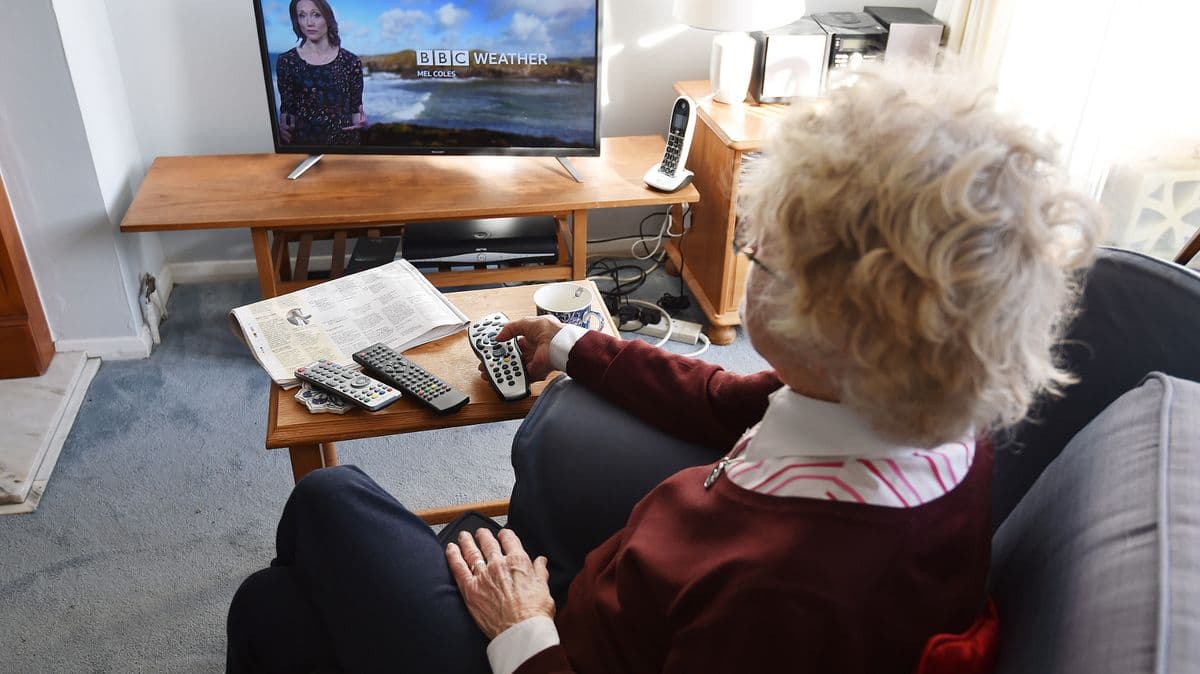
More than 150,000 voters in the UK have demanded that free-to-air terrestrial TV be protected beyond its current license expiration in the early 2030s, citing concerns about digital exclusion and the costs of internet streaming. Campaigners, supported by several Labour MPs, are calling for a hybrid model that ensures continued universal access to Freeview alongside internet services. The UK government's Department for Culture, Media and Sport (DCMS) is working on a long-term approach to TV distribution and will consult on extending digital terrestrial television beyond 2034.
Key Takeaways
- A petition by Silver Voices hit 150,000 signatories, backed by the Digital Poverty Alliance and the Broadcast 2040+ Coalition.
- Current terrestrial TV licenses are only secure until the early 2030s, with a potential switch-off point in 2034.
- The DCMS is leading a project to assess distribution beyond 2034 and will consult on extending digital terrestrial television (DTT).
- Advocates call for a hybrid model where IPTV complements rather than replaces traditional terrestrial broadcasts to ensure universal access.
Why It Matters
The tension between infrastructure costs and universal access is reaching a policy flashpoint as the 2034 license expiration nears. For platform operators, this signals that an all-IP transition is politically fraught, likely requiring expensive bridging subsidies or parallel DTT/IPTV operations for another decade. The outcome will dictate how UK public service broadcasters (PSBs) allocate future CAPEX—either maintaining legacy transmission networks or shifting entirely to CDN-based delivery. Watch for the upcoming DCMS Green Paper for specific feasibility benchmarks on broadband reach and mandatory IP support for vulnerable groups.
Additional Context
The debate intensified following the May 2024 passage of the Media Act, which updated the UK regulatory framework to include video-on-demand services under Ofcom’s remit. Per Clifford Chance (April 2025), the Act grants Ofcom new enforcement powers over 'Tier 1' streaming services, requiring platforms with over 500,000 UK users to maintain content standards similar to traditional broadcasters. This legislative shift aims to level the playing field between digital platforms and traditional PSBs like the BBC and ITV, which must still balance broad accessibility mandates with the rising costs of terrestrial maintenance.
While viewing habits continue to migrate, traditional broadcast TV still accounted for 56% of in-home viewing in 2024, according to Ofcom’s Media Nations 2025 report (July 2030, in-universe context relative to 2026 reporting). To manage the transition, UK broadcasters launched Freely in April 2024, a broadband-based successor to Freeview designed to deliver live TV without an aerial. According to HDTVTest (January 2026), Freely surpassed one million weekly users for the first time in late 2025, signaling growing consumer adoption of IP-based linear television.
However, a total switch-off remains technically challenging due to broadband infrastructure gaps. Per Broadband TV News (May 2026), approximately one million households still struggle with broadband affordability. Public service broadcasters are increasingly supportive of a long-term shift to IP delivery to reduce the operational burden of terrestrial signals, but the UK government has indicated that any transition must include safeguards such as nationwide gigabit availability, which is targeted for 2032. Industry groups like the Broadcast 2040+ Coalition argue that without a formal extension, up to 10 million viewers could be at risk of losing access to basic news and emergency communications.
Read full article at mirror.co.uk
Enjoy our coverage?
Add StreamingMeme as a preferred source on Google to see more of our streaming news at the top of your Search results.
Add as preferred source