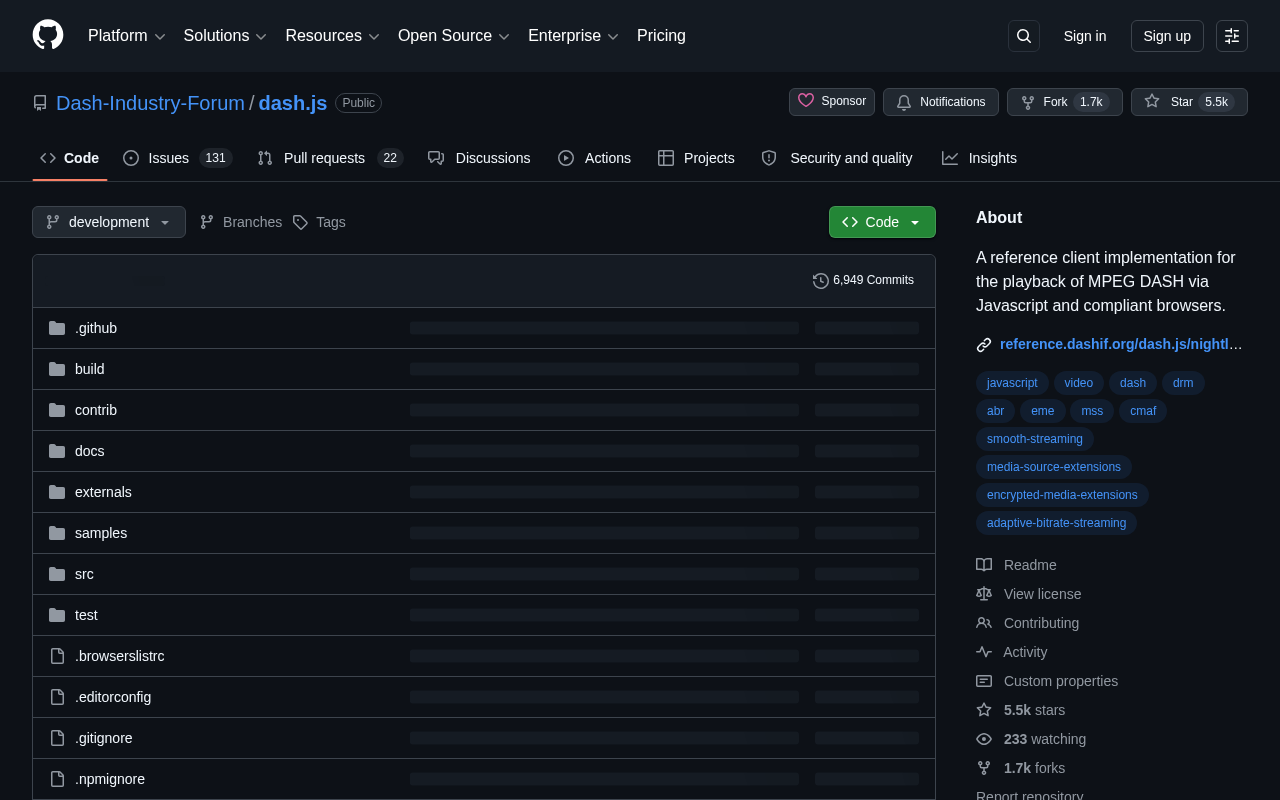
The DASH Industry Forum (DASH-IF) is the leading industry association driving the adoption of MPEG-DASH, the global standard for adaptive streaming. It developed and maintains dash.js, the reference open-source JavaScript player, which serves as both a production-ready player and a conformance benchmark for DASH implementations. DASH-IF also provides conformance validation tools, live source simulators, and media tools that ensure interoperability across the streaming ecosystem. Now operating as a working group under the Streaming Video Technology Alliance (SVTA), it continues to shape the future of HTTP-based streaming through collaborative standardization and testing.
AWS has updated its SDK to include concurrent function execution for Elemental MediaTailor, enabling parallel child function runs to improve latency in streaming pipelines. The update also adds support for various new features across other AWS services, including S3 access points for AWS Backup and updated controls for Amazon Bedrock AgentCore.
AWS has updated its Go SDK to version 2026-07-31.2, which includes new graphic composition capabilities for AWS Elemental Inference on cropped video outputs. The release also introduces transcript formatting improvements for Amazon Transcribe and mid-conversation tool change support for Amazon Bedrock.
A regression in MediaMTX v1.16.0 causes AV1 video ingested over RTMP to become undecodable when delivered via RTSP, while HLS delivery remains unaffected. The issue, linked to code changes in the internal codec processor, has been verified across multiple subsequent versions using FFmpeg and other publishers.
Apache APISIX is adding GCP Workload Identity support to its ai-proxy plugin, allowing developers to authenticate with Vertex AI services keylessly. This update removes the need for managing static service account keys when deploying streaming infrastructure on Google Kubernetes Engine.
Rigaya has updated its QSVEnc encoding tool to versions 8.21 and 8.22, adding support for Windows named pipes and multi-threaded OpenCL pipeline optimizations. The updates also expand video processing capabilities with new RIFE frame interpolation filters, ONNX-based NPU processing, and additional SDR to HDR model support.
Eyevinn Technology has released Strom, an open-source GStreamer media pipeline engine with a browser-based node editor for real-time video flows. The system supports WebRTC, SRT, NDI, and AES67, and acts as the media backend for the Open Live production platform.
A new Chrome extension, ParamountQuality+, provides real-time streaming quality insights for Paramount+ content, including resolution, bitrate, and manifest data. This tool is designed to offer engineers and analysts direct access to in-browser video playback metrics for VOD and live streams. It injects lightweight instrumentation to inspect manifests and segments, supporting MPEG-DASH and HLS formats for both on-demand and Google DAI live streams.
GeiserX has developed WhisperSubs, a Jellyfin plugin that automatically generates subtitles for media libraries using local AI models. The plugin supports fully local audio transcription via whisper.cpp, automatic language detection, forced subtitles, and GPU acceleration. It includes features like a priority queue, real-time progress updates, and scheduled tasks for seamless integration with Jellyfin's admin UI.
This GitHub repository provides a curated list of models, text encoders, and tools for the LTX-2 video generation suite, highlighting LTX2.3-Multifunctional, a desktop-optimized version with lower GPU requirements (24GB VRAM). It details various LTX-2 models, including quantized versions, LoRAs, and specialized text encoders designed to enhance generative AI capabilities for video production by improving prompt adherence and fidelity.
Users are reporting that playback of recorded video from Frigate's VOD HLS playlist stalls on Apple iOS and Safari devices due to the playlist referencing empty fMP4 fragments. This issue appears to be specific to Frigate's HLS playlist generation and affects Hikvision cameras, while other playback paths for the same files work correctly. The problem seems to stem from a strict Apple decoder stalling on data-less fragments.