

Enterprises dump per-word translation pricing for business impact metrics
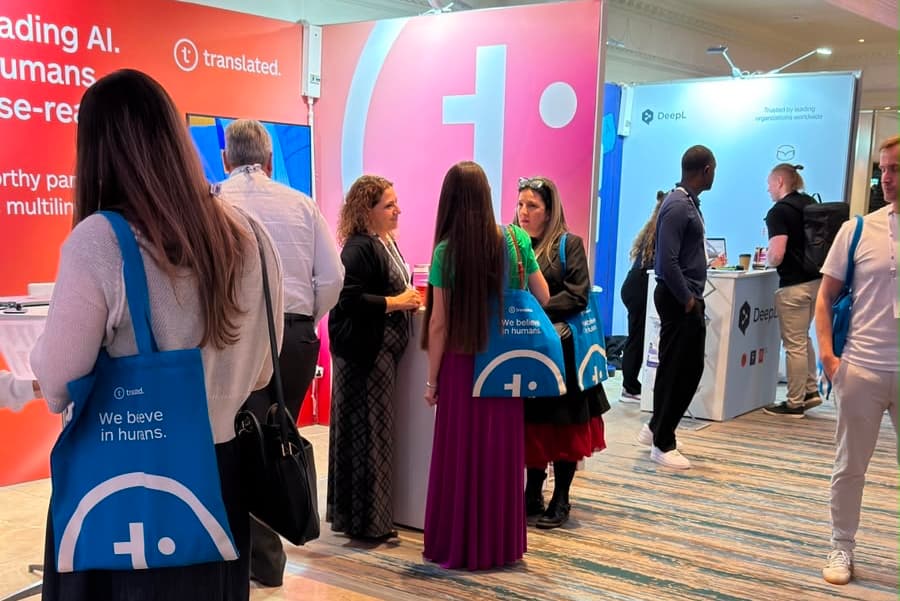
Insights from the LocWorld55 and TAUS Rome conferences highlight a significant shift in enterprise AI translation, as buyers move away from legacy per-word pricing toward business impact metrics. Organizations of all types are establishing in-house AI pipelines, shifting focus toward content "shipability" and facing operational hurdles, such as compliance under the EU AI Act and managing the limitations of "AI judging AI" pipelines.
Key Takeaways
- Localization department structures are contracting to 2-5 technical specialists who oversee automated AI quality gates.
- Companies like DHL, Miro, and AstraZeneca are building in-house AI pipelines, using legacy TMS platforms only for human reviews.
- Autonomous orchestration has compressed product delivery cycles by over 90%, reducing time-to-market from 43 days to three.
- Linguist roles are being redefined as cultural risk advisors and governance owners responsible for final content shipability decisions.
- Modern AI workflows use single-pass reasoning models to produce, assess, and refine localized output within a single context window.
Why It Matters
The commoditization of translation output is forcing a transition from volume-based procurement to strategic outcome management. For the streaming ecosystem, this means localized content can be deployed nearly as fast as the original source, but it introduces significant cultural and regulatory risks. AI-generated cultural clichés—like K-video assets with hallucinated landmarks—require a shift from linguistic auditing to brand and visual governance. Watch for whether single-pass reasoning models significantly reduce the 20% quality regression rate currently reported by some enterprise AI early adopters.
Additional Context
The operational shift towards 'shipability' over linguistic purity is accelerating as global AI translation spending is projected to reach $4 billion in 2026, per recent market analysis. This growth is increasingly fueled by multimodal capabilities. Translated's lead on the €29 million European DVPS project, announced earlier in 2026, signals a move toward models that learn from direct interaction with physical reality rather than just static digital text. According to project lead Sébastien Bratières, these next-generation systems aim to solve the information gaps that cause current LLMs to fail in high-stakes environments like healthcare and technical services.
While speed is increasing, regulatory pressure is moving in tandem. Per Euractiv and Legalnodes reporting in June 2026, the European Commission's newly published Code of Practice for AI transparency reinforces Article 50 of the EU AI Act. Beginning August 2, 2026, companies must ensure AI-generated content—including deepfakes and localized video—carries machine-readable signatures and clear labeling for EU consumers. This creates a compliance-driven floor for the 'quality estimation' tools mentioned at LocWorld55, as enterprises can no longer use opaque automated metrics to bypass transparency requirements.
Simultaneously, a 'token trap' is complicating the financial transition. While Dell and Uber have criticized legacy per-word pricing, recent data from Forbes in June 2026 suggests some enterprises are burning through their 2026 AI token budgets three times faster than anticipated. This cost volatility is driving a move toward efficiency-focused architectures like 'single-pass' reasoning models, as organizations look to prevent fragmented AI agent loops from inflating cloud compute bills during the scale-up phase.
Read full article at translated.com
Enjoy our coverage?
Add StreamingMeme as a preferred source on Google to see more of our streaming news at the top of your Search results.
Add as preferred source