

Digital audio platforms push upstream to capture $8.3 billion ad gap
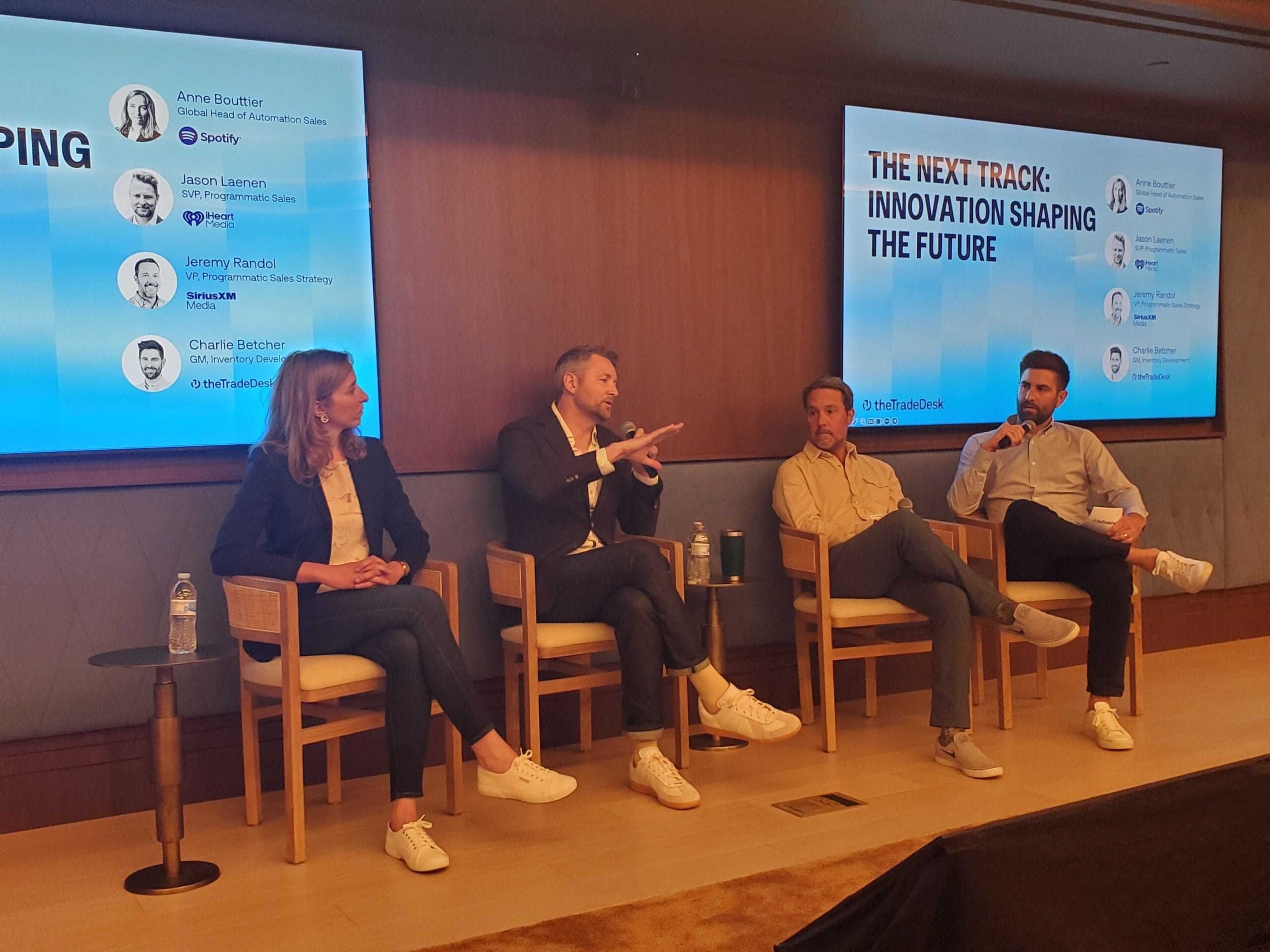
Despite digital audio making up 30% of media consumption, it only attracts 3% of US ad spend, prompting platforms like The Trade Desk and SiriusXM to advocate for deeper integration of audio into agency campaign planning. They aim to shift digital audio from an afterthought to a core component of omnichannel advertising strategies, seeking to leverage programmatic tools and direct integrations to 'swim upstream in planning'. Efforts include integrations with planning tools like VideoAmp and promoting programmatic guaranteed deals, as well as the production of video content to align audio with broader digital media mix considerations.
Key Takeaways
- Digital audio ad spend will surpass $8 billion this year, yet it continues to earn fewer ad dollars per hour spent than any other digital medium.
- SiriusXM has integrated its first-party data into VideoAmp’s cross-platform planning tool to allow side-by-side budgeting with CTV and linear video.
- Spotify reports that omnichannel campaigns incorporating audio reduced cost-per-household reach by 9% and cost-per-action by 40% in recent tests.
- Biddable audio campaigns on The Trade Desk have doubled over the last year as buyers shift away from reserved publisher-direct deals.
- Podcasting remains a programmatic challenge due to a persistent advertiser preference for host-read segments over automated insertions.
Why It Matters
The integration of audio into the automated planning stack marks a critical pivot from siloed experimentation to full-funnel utility. By embedding inventory directly into agency cross-screen environments like VideoAmp, audio platforms are finally addressing the 'planning friction' that has historically capped digital audio at a 2.8% to 3% share of total internet ad revenue. For the broader ecosystem, this signals a consolidation of media buying where audio, CTV, and display are managed via the same identity and measurement frameworks. Watch for the 2026 FIFA World Cup to serve as a high-volume testing ground for this 'audio-as-omnichannel' strategy, as brands look to avoid the high cost of official sponsorships through strategic programmatic audio layers.
Additional Context
The push to centralize audio within the media mix coincides with a period of record-setting digital spending and intense focus on performance metrics. Per IAB and PwC (April 2026), digital audio advertising reached $8.4 billion in 2025, a 10.2% year-over-year increase, though its total share of the digital spend remained stagnant. This growth was outpaced by digital video and social media, which saw gains of 25.4% and 32.6% respectively. The IAB report further noted that the definition of a podcast is shifting, with 71% of creators now producing video versions. This move toward 'video podcasts' aligns with platform strategies at Spotify and SiriusXM to make audio inventory more compatible with existing video-buying workflows.
In preparation for the 2026 FIFA World Cup, platforms are leveraging new automated capabilities to manage the projected traffic of 6 billion viewers. Per The Trade Desk (January 2026), the launch of its Kokai platform introduced agentic AI tools designed specifically to help planners automate pacing and budgets for major live sports events. This tech upgrade allows advertisers to layer audio contextual signals more easily alongside CTV buys. According to SiriusXM (March 2026), they became the first audio partner in VideoAmp’s VXP platform, specifically seeking to capture a larger slice of the $380 billion total US digital ad market projected for 2026.
While the inventory is expanding, the sector faces pricing volatility. Per Mondiad (June 2026), CPMs and conversion rates for live sports environments are expected to fluctuate significantly during the tournament's knockout stages. Consequently, audio platforms are promoting programmatic guaranteed deals to offer price stability for brands that lack the $65 million to $95 million required for top-tier FIFA sponsorships, as cited by Forbes (May 2026). This shift toward 'strategic layering' suggests audio will rely on its ability to lower overall campaign CPAs to compete with high-demand video formats.
Read full article at adexchanger.com
Enjoy our coverage?
Add StreamingMeme as a preferred source on Google to see more of our streaming news at the top of your Search results.
Add as preferred source