
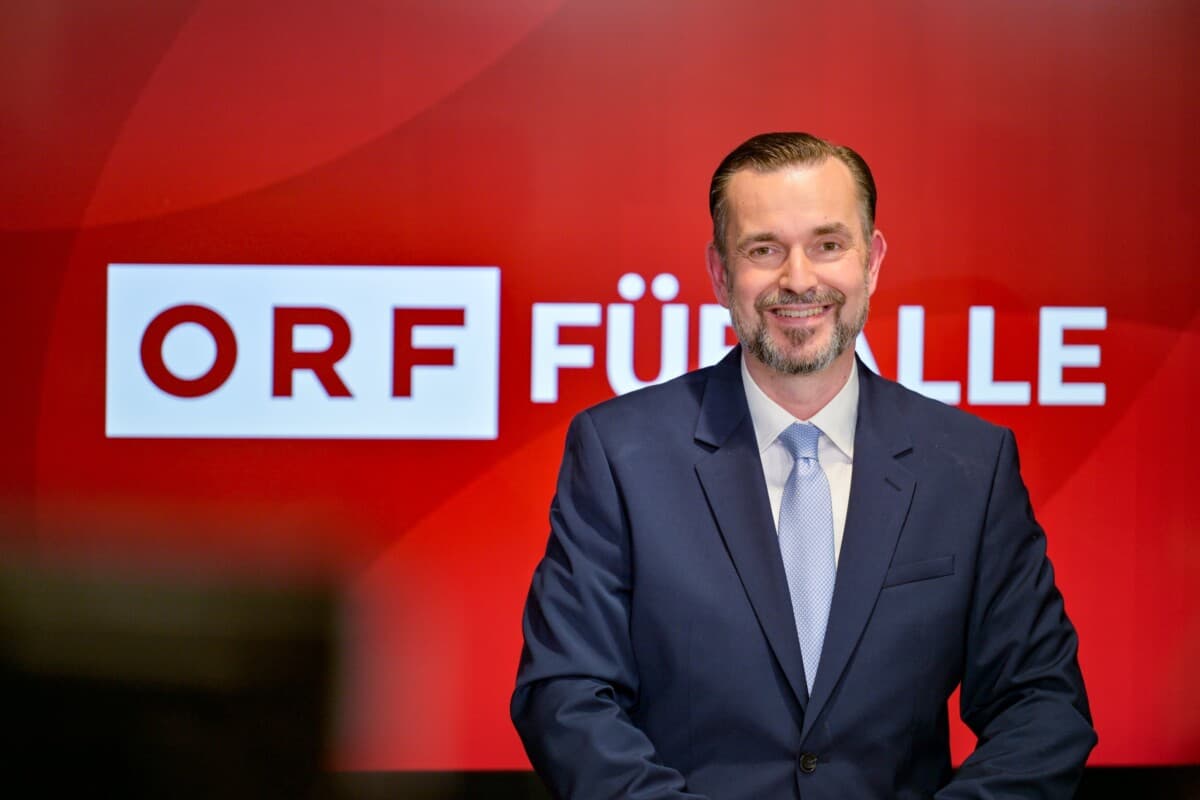
Dr. Clemens Pig, former APA chief executive, has been appointed as the new Director General for Austria's public broadcaster ORF for a five-year term starting in January 2027. Pig's strategic vision focuses on digital transformation, accelerating platform growth, and expanding streaming services amidst a significant budget cut and a funding crisis for ORF. He aims to transition ORF into a digital public-service platform with a stronger focus on regional programming and younger audiences.
The appointment of an external news agency chief over seasoned television executives signals a radical shift toward data-driven, platform-agnostic distribution. As ORF faces rigid inflation-linked budget constraints and political scrutiny, Pig’s mandate is to prove public service utility through a unified digital interface rather than linear reach. This move mirrors a broader European trend where public broadcasters must rationalize multi-channel costs while competing with global streamers for youth attention. Industry players should monitor ORF's upcoming reform package, as its success in transitioning to a digital-first model under financial duress will serve as a blueprint for other state-funded media facing similar austerity measures.
The leadership change at ORF arrives as the broadcaster navigates a fundamental restructuring of its financial and operational model. Per Public Media Alliance (January 2024), Austria recently transitioned from a traditional license fee to a mandatory household levy of €15.30 per month, a move designed to stabilize funding while accounting for shifting consumption habits on mobile devices and tablets. However, this transition has been complicated by political pressure; reports from the same outlet in February 2025 noted that coalition negotiations between the FPÖ and ÖVP included proposals for 15% budget cuts and the potential closure or merger of niche channels like ORF Sport Plus and ORF III.
Technologically, ORF is already deep in a transition toward hybrid distribution models. In November 2024, the broadcaster extended its multi-year satellite contract with SES to ensure continued reach for its linear HD channels, even as it aggressively builds out its streaming platform, ORF ON. Per Broadband TV News (June 2026), ORF’s budget of roughly €1 billion is under significant threat as the government recently confirmed the removal of a €93 million annual compensation payment. Pig’s background at APA — a cooperative owned by ORF and private publishers — is expected to be vital in navigating these complex relationships.
Furthermore, the selection process was heavily influenced by the European Media Freedom Act, which became fully applicable in August 2025. Per European Commission filings (February 2026), the Act mandates transparent and non-discriminatory appointment procedures for public service media to prevent political interference. ORF’s Foundation Council emphasized that their record 15-hour marathon hearing was specifically designed to meet these rigorous new EU transparency standards, positioning the broadcaster as a test case for the Act’s practical enforcement across the bloc.
Add StreamingMeme as a preferred source on Google to see more of our streaming news at the top of your Search results.
Add as preferred source