

Agora launches Signaling SDK for real-time metadata sync and AI integration
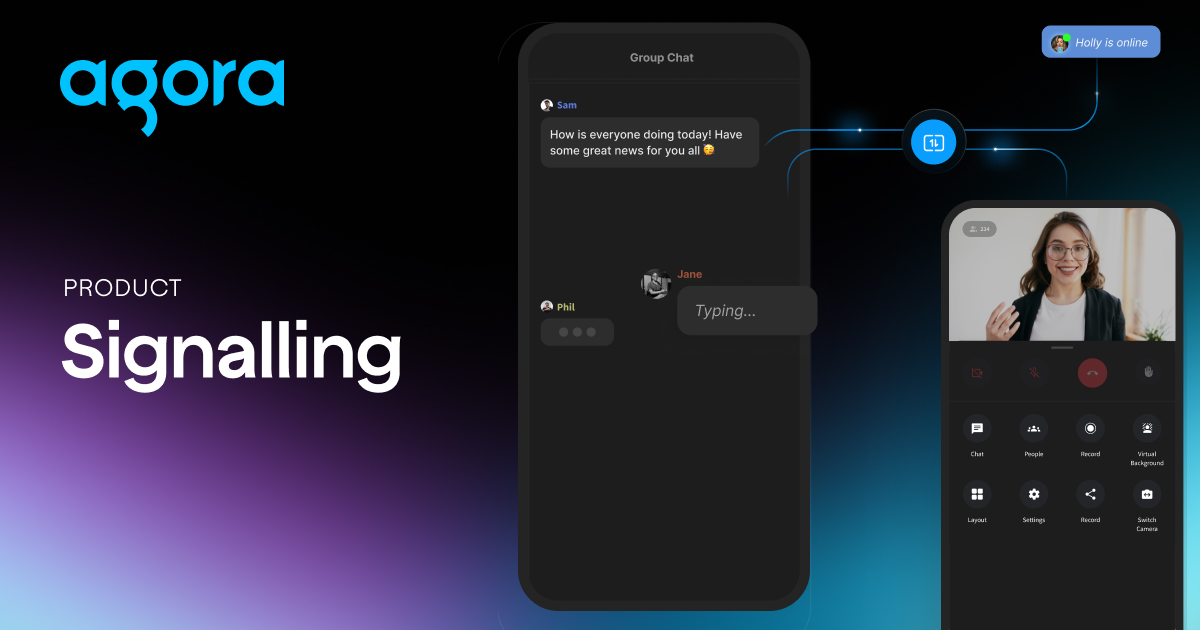
Agora has unveiled its Signaling SDK, a new product designed for real-time application metadata synchronization via low-latency signaling over its global network. The SDK supports a wide array of platforms including Android, iOS, Web, Unity, React Native, Flutter, Windows, and Linux C, and integrates with other Agora services like voice, video, media services, and AI extensions.
Key Takeaways
- Delivers real-time synchronization with average global latency under 200ms and sub-100ms within the same region.
- Supports concurrency for up to 1 million users per channel and system-wide scaling for up to 1 billion online users.
- Cross-platform compatibility includes Android, iOS, Web, Unity, React Native, Flutter, Windows, and Linux C.
- Native integration points for OpenAI's Realtime API and Agora's Conversational AI Engine for speech-to-text workflows.
Why It Matters
The new SDK addresses the coordination gap between raw media streams and application logic. By providing a dedicated low-latency path for metadata—such as student status in classrooms or inventory updates in live commerce—Agora is positioning its infrastructure as the necessary glue for complex, interactive streaming apps. This move directly competes with established real-time data platforms like PubNub and Ably. For the ecosystem, it signals a shift toward vertical integration where a single provider manages the synchronized state of both the video stream and the interactive interface. Watch for adoption rates in the social commerce sector, where sub-second inventory sync is a critical friction point.
Additional Context
The launch follows a broader trend of real-time engagement providers expanding beyond pure video/voice into data infrastructure. In early 2025, persistent state management and ultra-low latency signaling became critical for the deployment of multimodal AI agents. Per recent reports from Nasdaq (September 2025), Agora expanded its partnership with OpenAI to incorporate the first multimodal large language model (MLLM) into its Conversational AI Engine, a development that relies heavily on the low-latency metadata sync capabilities now offered by the Signaling SDK. Competitively, the market for signaling is consolidating around providers who can offer 'all-in-one' RTC stacks. While infrastructure-first platforms like PubNub and Ably still command significant market share for pure data sync, B2B analysts at GetStream (September 2025) note that streaming specialists like Agora and VideoSDK are successfully peeling away customers by bundling data signaling with existing video pipelines. Furthermore, the rise of cloud gaming and interactive live events in 2025 has standardized the requirement for sub-200ms latency, forcing vendors to process data closer to the edge via global software-defined real-time networks (SD-RTN) to maintain synchronization in synchronized sports and wagering applications.
Read full article at prod.agora.io