

Ad Tech Vendors Shift to On-Prem and Containerized Cloud for Cost and Performance
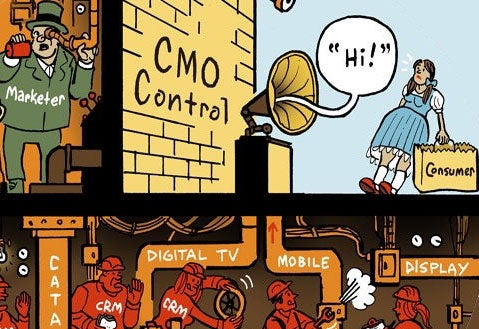
Independent ad tech vendors like PubMatic and Index Exchange are differentiating themselves by adopting unique cloud infrastructure strategies, either owning and operating their own servers or offering containerized DSP deployments. This approach aims to reduce costs for high-volume programmatic advertising and enhance capabilities for audience targeting and curation, directly challenging reliance on public cloud providers. The article discusses the benefits and trade-offs of these 'on-prem' strategies versus public cloud usage for ad tech infrastructure.
Key Takeaways
- Programmatic vendors like PubMatic and Index Exchange are adopting 'on-prem' infrastructure or containerized DSP deployments to cut public cloud costs and improve ad tech capabilities.
- PubMatic launched Decision Fabric, allowing DSPs to use containerized models within PubMatic's SSP for improved audience targeting and curation without QPS restraints.
- Index Exchange introduced Index Cloud, which facilitated the first 'containerized DSP deployment' in partnership with Bedrock Platform in April.
- Ad tech’s high volume of bid requests makes public cloud rental cost-prohibitive, driving the shift towards owned infrastructure and containerization for better cost control and AI model feedback loops.
- Magnite CTO Dave Buonasera notes that while these approaches offer advantages, they are not universally superior, particularly for fluctuating traffic like live sports, where public cloud elasticity is beneficial.
Why It Matters
The move to owned or containerized cloud infrastructure by ad tech vendors signals a critical pivot in managing the economic and performance demands of programmatic advertising. This trend challenges the public cloud's dominance for specific ad tech functions, potentially leading to more specialized infrastructure solutions across the ecosystem. Stakeholders should monitor changes in ad tech infrastructure costs and performance metrics, especially how containerization impacts supply path optimization and the competitive landscape between SSPs and DSPs.
Additional Context
The trend of ad tech moving compute closer to the bidstream, as seen with PubMatic's Decision Fabric and Index Exchange's Index Cloud, reflects a broader industry effort to reduce latency and costs associated with public cloud infrastructure. A Digiday briefing (June 2026) highlighted that containerization is progressing from a conceptual stage to a competitive differentiator, with firms aiming to reverse the traditional architecture that separated data, decisioning, and execution. By embedding bidding logic and audience qualification directly into the supply path, operational costs are reduced, and signal fidelity improves. For instance, Bedrock Platform's containerized DSP bidder within Index Exchange's infrastructure (April 2026, PPC.Land) eliminated QPS throttling and significantly lowered per-request compute costs by bringing decisioning inside the exchange's own data centers. This allows DSPs to evaluate every impression on a deal, rather than a throttled sample, enhancing the effectiveness of AI-driven optimization models. The IAB Tech Lab's Agentic Advertising Management Protocols (AAMP), particularly the Agentic Real-Time Framework (ARTF), provides the technical foundation for these containerized deployments, as reported by PPC.Land (April 2026). Amazon's donation of its Dynamic Traffic Engine to IAB Tech Lab (April 2026) further supports this by enabling DSPs to signal bidding priorities to SSPs, reducing QPS waste. This shift aims to "hand more margin back out to the market," according to Kevin Flood of First Party Capital (Digiday, June 2026), by allowing buyers access to the full bidstream without throttling while reducing cloud processing costs, potentially fostering new commercial models. While some executives describe the shift as getting "closer to the metal" and blurring the lines between SSPs and DSPs (Digiday, June 2026), the implications for market structure are still debated, with potential for both consolidation and heightened competition among specialized players.
Read full article at adexchanger.com