
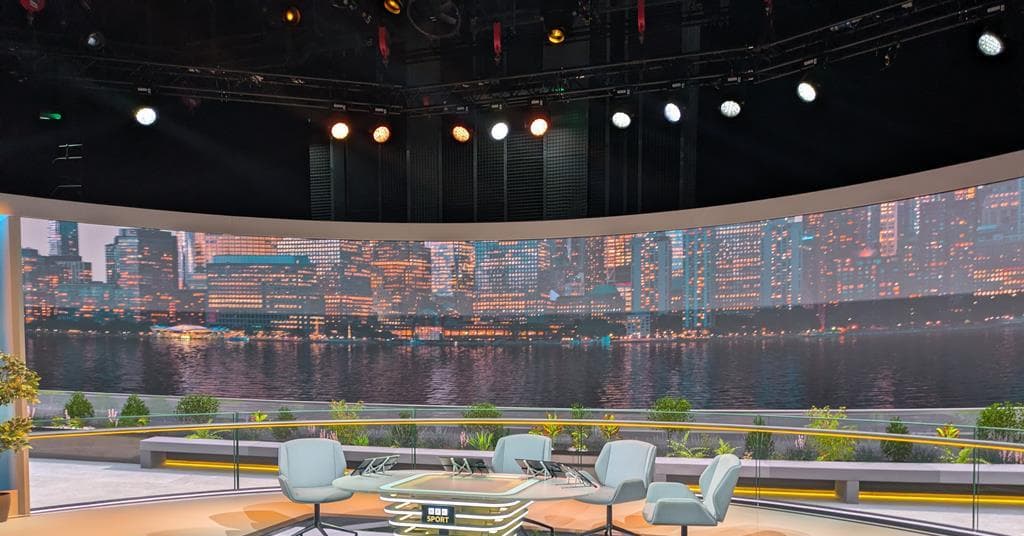
BBC Sport will host its World Cup 2026 studio in Salford, aiming for millions in cost savings and significant carbon emission reductions. The broadcaster plans multi-platform content, including 10-minute live streams on YouTube and TikTok, and will deliver all games in HDR. This approach leverages large LED screens and adjustable studio setups to maximize efficiency and reach across various platforms.
The BBC's pivot to a UK-based virtual production model for the world's largest sporting event signals a maturing of remote broadcast workflows. By abandoning the traditional 'fly-away' studio model, the BBC is prioritizing cost-efficiency and sustainability over on-site prestige, a move necessitated by the massive logistics of a three-country tournament. This strategy also marks an aggressive shift toward digital funneling, using short-form live windows on social platforms to fight linear audience fragmentation. For competitors, the success of this 'hybrid-remote' approach will likely reset the baseline for major event budgets. Watch for UK audience retention metrics six months post-tournament to see if this multi-platform strategy successfully converts casual social viewers into long-term digital subscribers.
BBC Sport's decision to anchor its 2026 World Cup coverage from Salford rather than deploying a fly-away studio in North America represents a significant test of remote and virtual production workflows at the scale of a major global sporting event. The production, housed in MediaCity Studios' 4,700 sq ft HQ3 studio, features a 12m x 3m ROE LED wall and floor volume combined with a MoSys Startracker Max camera tracking system and Pixotope virtual production software to create immersive environments that dynamically reflect the time of day and weather conditions at each of the 16 host cities. MediaCity Studios deployed an advanced multiple tracked camera and LED virtual production environment using Unreal Engine and Pixotope for the first time, with each broadcast camera undergoing weeks of calibration to achieve sub-millimetre accuracy for blending physical and virtual elements. The operation delivered over 120 hours of live content and 54 bespoke virtual environments across the tournament.
The financial and sustainability rationale behind the BBC's Salford-based approach has drawn scrutiny from industry observers and competitors alike. The Guardian reported that BBC director of sport Alex Kay-Jelski acknowledged the move would save "a few million" pounds and achieve a 19% carbon reduction compared with Qatar 2022, while noting that critics questioned whether the broadcaster could maintain editorial credibility without an on-site presence. Meanwhile, ITV chose the opposite approach, deploying a studio in New York for its own World Cup coverage, creating a direct comparison between the two UK broadcasters' strategies for the same tournament.
From a technical infrastructure perspective, the BBC's World Cup operation required substantial transatlantic connectivity to bring match feeds from FIFA's International Broadcast Centre in Dallas back to Salford for real-time processing. TVBEurope reported that BBC Sport partnered with BMC to deliver managed data flows and video streams across the Atlantic, with a total bandwidth of 40 gigabits per second carrying 50 HD and three UHD streams, all processed in HDR 50P with over 100 LUT boxes standardising the picture across the facility. The signal path upgrades and automated disaster recovery systems deployed for this event establish a reference architecture that other broadcasters evaluating remote production for major events will likely study.
Add StreamingMeme as a preferred source on Google to see more of our streaming news at the top of your Search results.
Add as preferred source